The Renaissance of Solid Soap: Why Luxury Brands are Returning to Artisanal Formulations
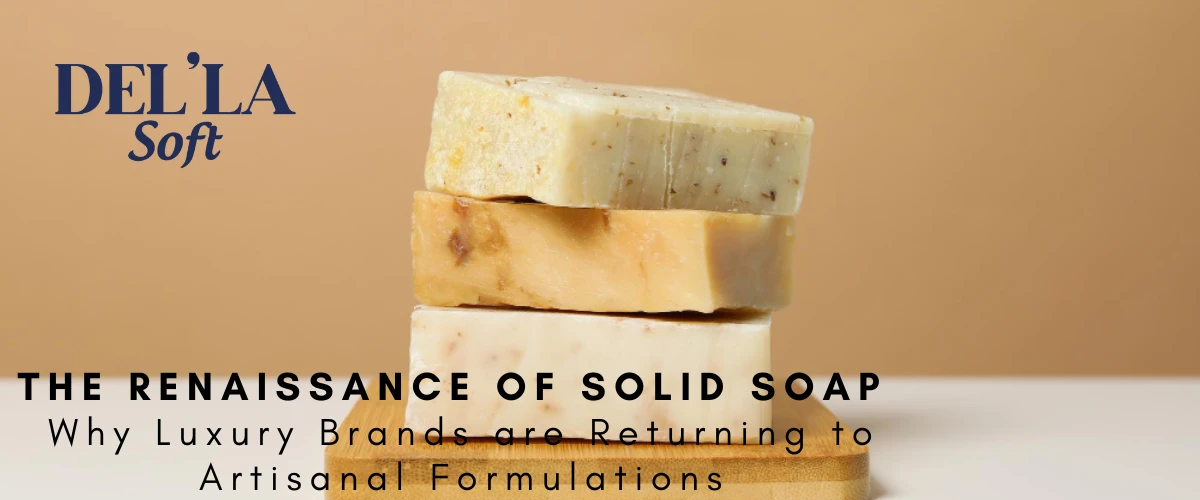
The beauty industry is witnessing a sophisticated paradox. In an era dominated by high-tech synthetic gels, the world’s most prestigious skincare houses are returning to the "humble" bar of soap. However, this is not the mass-produced cleanser of the past. In 2026, the Renaissance of Solid Soap is defined by artisanal craftsmanship, skin-first active ingredients, and a commitment to plastic-free luxury.
For private label brands, this shift represents a strategic opportunity to blend sustainability with high-margin, premium positioning in the EU and UK markets.
1. The Science of "Treatment Bars": Beyond Basic Cleansing
Modern consumers no longer view solid soap as a generic commodity. The trend has pivoted toward "Treatment Bars"—formulations that act more like solid serums than traditional detergents.
- Microbiome Respect: Unlike traditional high-pH soaps, new-age artisanal bars are formulated to maintain the skin’s acid mantle. By incorporating prebiotic complexes, these bars support the skin barrier while cleansing.
- Active Concentration: Solid formats allow for a higher concentration of active ingredients (such as Niacinamide or Vitamin E) without the need for the synthetic preservatives often required in water-based liquid formulas.
- How active ingredients define 2026 skincare trends
2. Cold Process vs. Hot Process: The Artisan’s Choice
To achieve "Luxury" status, the manufacturing method is as critical as the ingredients. Most mass-market soaps use a "hot process" that can degrade delicate botanical extracts.
Luxury brands are increasingly demanding Cold Process Manufacturing. This method preserves the integrity of heat-sensitive vitamins and antioxidants, resulting in a bar that retains its natural glycerin—a powerful humectant that draws moisture into the skin.
For brands targeting the European market, adherence to the EU Cosmetics Regulation (EC) No 1223/2009 is the mandatory baseline for safety and GMP-certified production.
3. The Sustainability Logic: Circular Beauty in 2026
The 2026 consumer is "eco-fatigued." Solid soap offers the ultimate solution: Zero-Waste by Design.
- The 80% Rule: Traditional liquid soaps are composed of up to 80% water. Removing water reduces shipping weight and volume, cutting logistics-related carbon emissions by an estimated 30-40%.
- Plastic-Free Dominance: Transitioning to solid formats eliminates the need for plastic pumps and bottles, aligning perfectly with the European Green Deal's packaging goals.
- The 'Skinification' of Hair Care and its impact on sustainable formats
4. Strategic Manufacturing: The 500-Unit Advantage
In the competitive beauty landscape, agility is everything. While many manufacturers demand massive volumes, professional manufacturing starting from 500 units allows brands to test limited-edition artisanal collections without high financial risk.
Finding the 20,000-unit sweet spot for established lines ensures that as a brand scales, cost-efficiency increases without compromising the handcrafted quality that defines the luxury segment. DEL'LA SOFT provides this scalability, ensuring that artisanal quality remains consistent from the first batch to the largest production run.
Ready to Launch Your Artisanal Soap Line?
Don’t let high MOQs stop your innovation. Start your premium private label journey with DEL’LA SOFT today. From bespoke formulations to GMP-certified production, we help you scale from 500 to 20,000+ units seamlessly. [Contact Our Manufacturing Experts for a Quote] export@dellasoft.net
DEL’LA SOFT is a Turkey-based private label cosmetics manufacturer serving EU and UK beauty brands with GMP-certified, EC 1223/2009-compliant production.